
What does it mean to be strong?
are you?

Dude! I had so much fun with this. I love writing this newsletter. I hope you’ll love reading it.
What is strength?
Everybody knows the rules, it’s weekend reflection time. This is not a bullet point list, this is not 3 quick steps, this is an exploration, this is a deep dive.
So let’s buckle in see what kinds of strength are out there.
Strength as Domination
The Mongol General asks: “What is the meaning of life?”
His son answers something about riding in the wind on the open plains. The general screams: “Wrong!”
Then Conan answers: “To crush your enemies, see them driven before you, and to hear the lamentations of their women“
The General is pleased and approves of this answer.
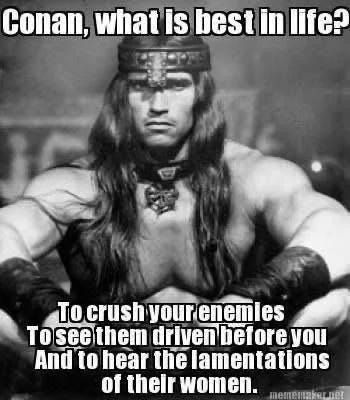
Times have changed and you’re not out (hopefully) to crush anyone, other than the competition :)
But this very basic idea of strength as domination over your problems is still core. Faster than the danger. Stronger than the obstacle. Smarter than the dilemma. More resilient, more insightful, more prepared. Stronger than whatever you have to face. You look your problems in the eye and dominate them.
It’s a bit out of fashion, today we talk a lot more about vulnerability, but it’s as valid as ever.
Git gud
Mens sana in corpore sano
Long before the idea of the renaissance man, classical antiquity gave us another model for how “things work together”, and how one’s development can not be unidimensional, and it is, in fact, all about the interconnecting pieces of the puzzle of what makes us who we are.
“Mens sana in corpore sano” translates as “a healthy mind in a healthy body”. We need both to be strong.
Sure, not everyone’s going to be an athlete, but for those of us working in “office jobs”, with computers, it’s so easy to neglect physical health and strength.
Strength as endurance
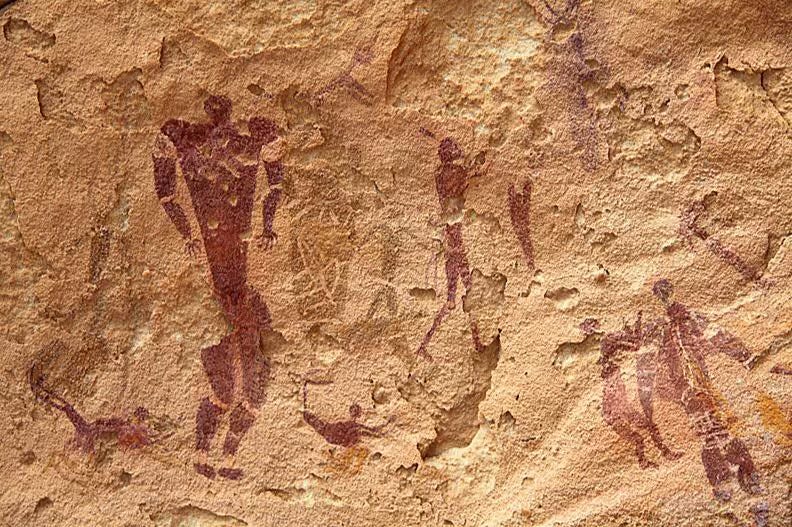
Sometimes, often time, we’re far from the strongest, or most powerful, or wisest, but we can always try to endure the most.
Just don’t give up. Patience, stubbornness, a sense of mission. Through ups and downs, some days you can do more, some days you do less, some days you may even be forced to take a step back, but don’t give up. Stay on the path.
Simply don’t quit.
Attachment or Detachment? Schrodinger’s strength
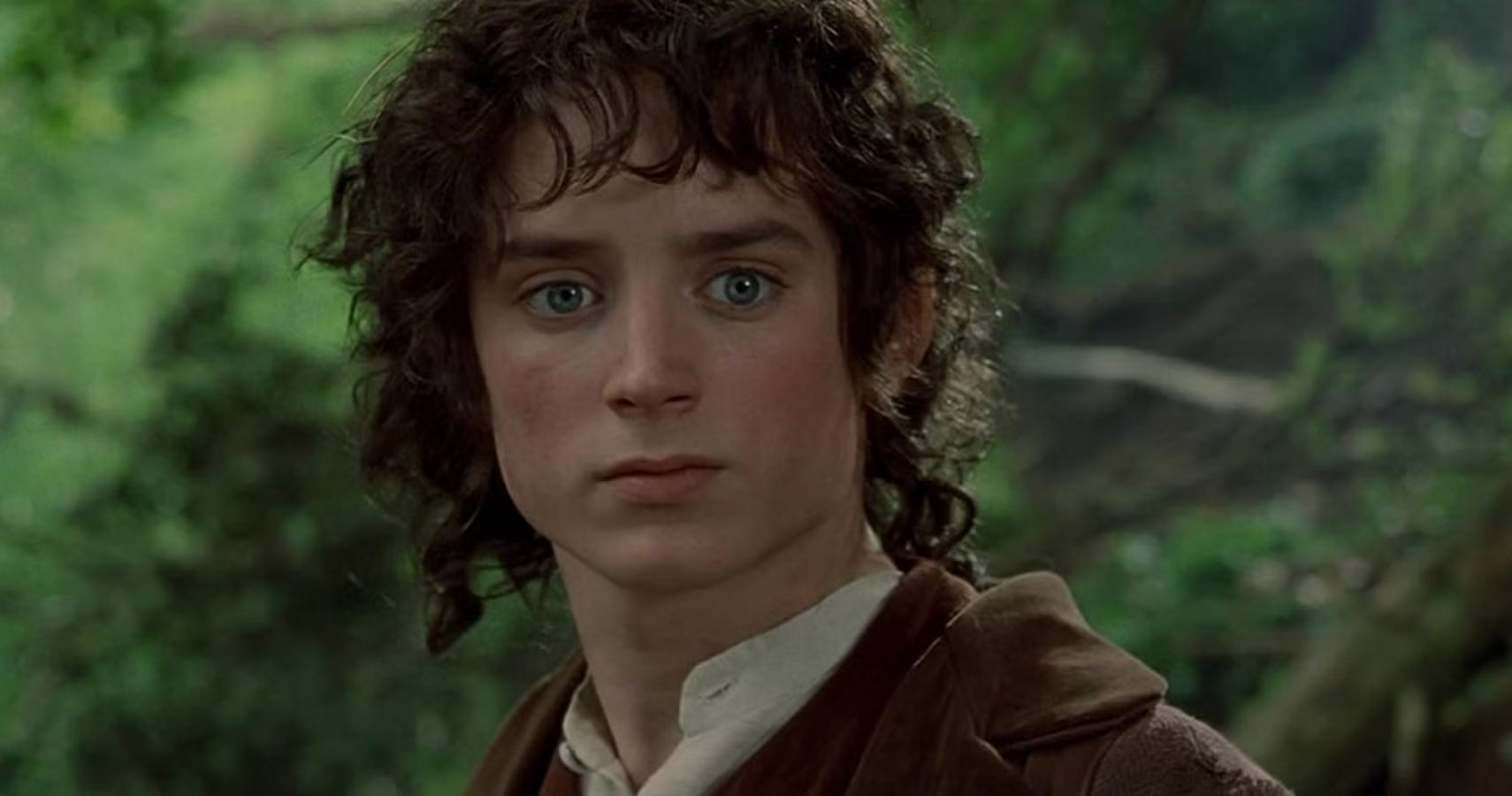
It’s fascinating how sometimes we get strength through our attachments, for an idea, for a person, for an organization. It is our affiliation, our connection, our love which makes us stronger. It gives us something to fight for and the motivation to keep going.
But the complete opposite is sometimes also true. The ability to give up something, to escape from psychological and social prisons, to remove ourselves from what hurts us, to regain our independence and say “Screw this, I’m out of here”, can also be an immense source of strength.
How do we know which one is right when?
They can both be deceiving and sometimes intertwined.
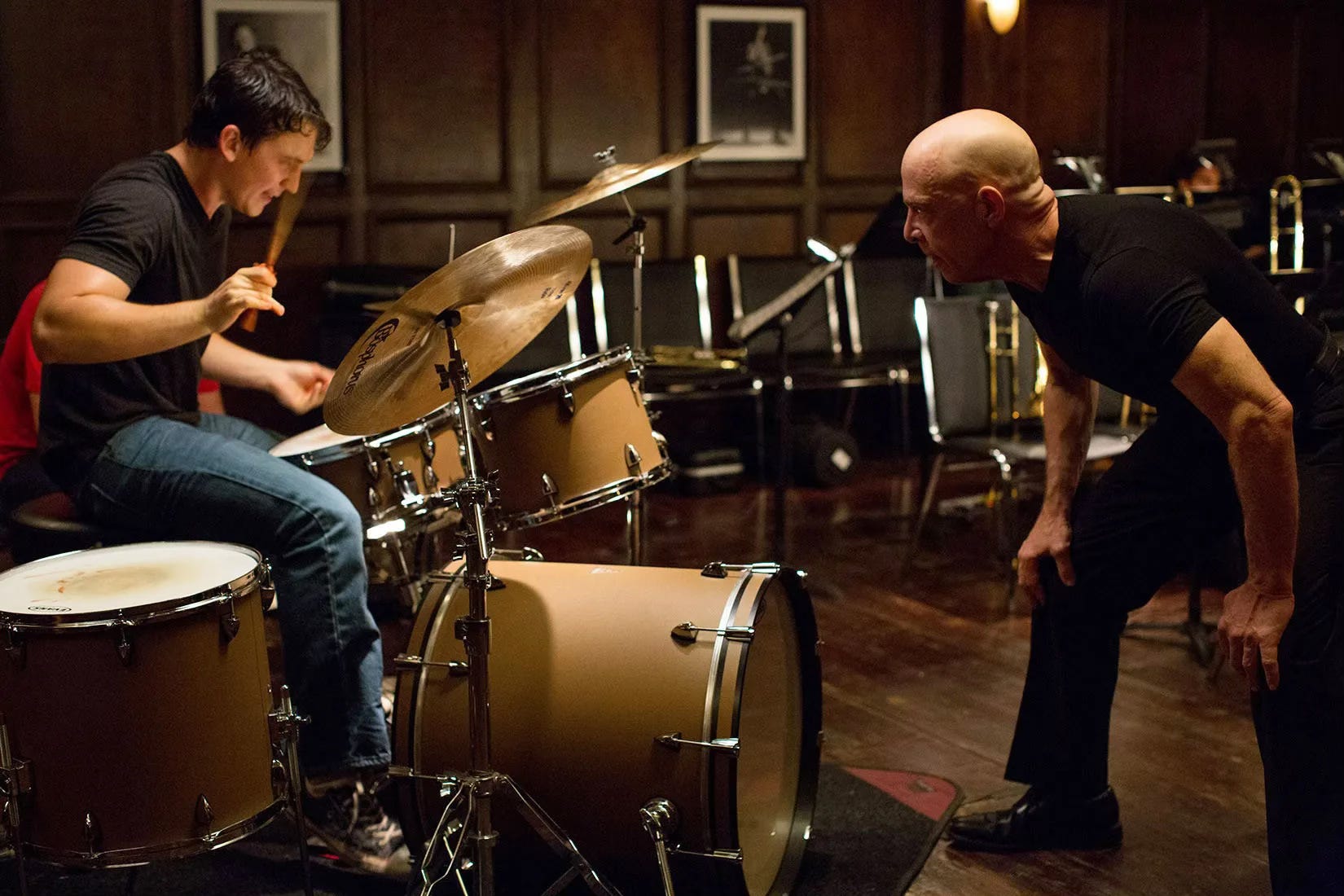
In Whiplash, Andrew is attached to the idea that perfection can only be achieved through the most painful kind of sacrifice. In his journey, he subjects himself of all kinds of hardship, including from abusive teacher Fletcher.
He is simultaneously drawn to this idea and also needs to escape it. He needs the fire but is also burned by the fire. How long can he take it, and is it actually good for him? Or even necessary?
Strength as adaptation?
A lot of people confuse the evolution of the species with the life of one individual, and they will quote Darwin saying that “It is not the strongest of the species that survives, nor the most intelligent that survives. It is the one that is most adaptable to change”. In an evolutionary sense, yes. But the meaning of our lives is not the same as evolution seen as species wide, multi generational phenomenon.
What makes you happy may have nothing to do with what makes evolutionary sense.
And yet, there is no doubt that adaptation is frequently a source of strength. However, perfect adaptation would be the equivalent of a daily lobotomy. Humans believe in things, have moral codes, have loved ones they protect, and the point of these things is precisely that they are not adaptable. They are not negotiable. They are fixed.
So there’s a dance. Be too rigid, too stubborn, and you’re going to get left behind. Be too flexible and you’re not going to be anything at all. An empty shell, a believer in nothing.
Where do you draw the line?
Captain Ahab from Moby Dick is stuck in one idea, one obsession, and it will end up killing him. At the same time, Winston Churchill was for a while, in the early days of World War 2 before Great Britain joined, seen by many as too rigid, too uncompromising. And yet, in retrospect, many of us are grateful for his rigidity on this issue and see it as a virtue.
Rigidity is not always good, and not always bad. Neither is adaptation.
In business, adaptation is easier to recommend. An example of failure to adapt is Kodak. They invented the digital camera in 1975, but they didn’t do anything with it. Financially and culturally they were too attached to film, and they lost because they did not adapt. They invented the future, but could not change their ways to embrace it.

My 2 cents? Find the things you’re not willing to compromise on and hold on them. But don’t put too many things on this list, or you’re going to become stuck in the past.
Let’s stop fetishizing weakness, shall we?
One of the great developments of the past decades has been a more compassionate perspective over what weakness and strength means. A more sophisticated understanding that 1) we are strong in different ways and 2) even the strongest among us have our weaknesses, and that’s fine. That’s the human condition.
We don’t expect perfection, nor do we value performative strength that much anymore, and that’s great. Or we say we don’t. But hypocrisy is a topic for another day.
Anyway, the point I want to make is it can go too far the other way too. An appreciation for the nuances of strength and weakness is one thing, but glorification of weakness is morbid. Let’s make winning great again.
And as much as we’d sometimes like blame the “new generations” for this and call it a Gen Z problem or whatever, the truth is that this has been going on sincer ever.
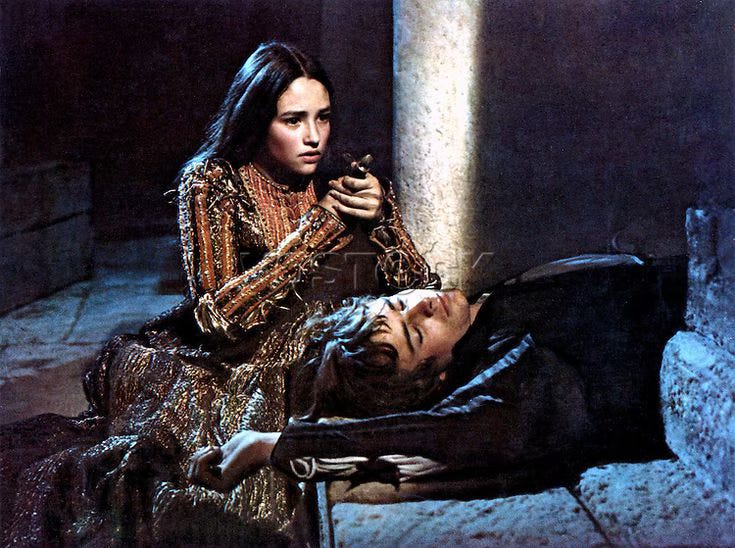
Romeo and Juliet were disturbed children, many years below adulthood, who ended up killing themselves, and yet people see this as an example of pure love.
And if you’ve made it all the way to here, give me a share, will you? Help me grow. Come on, you know you want to :)
Just kidding, no pressure.
Have a good one!
Andrei